Why Your Protein Shake Wrecks Your Gut (And How to Fix It)

You drink the shake. Twenty minutes later your stomach is tight, gassy, and bloated like you swallowed a balloon. You blamed yourself, maybe you're "just sensitive to protein." You're not. The problem is what's in the tub.

It's not the protein. It's the junk riding along with it.

Most protein powders bloat you for a few specific reasons, and none of them are your fault.

Cheap, low-quality whey. Bargain powders cut corners on filtration and processing. The result is a rougher, harder-to-digest protein that sits heavy and ferments in your gut. that's the gas, cramping, and bloat. Quality of the whey matters as much as the amount [1].

Artificial sweeteners. Sucralose and sugar alcohols don't just taste artificial. Research shows sucralose can shift the balance of your gut bacteria [2], and sugar alcohols like sorbitol and maltitol pull water into your intestines and ferment which is a direct line to bloating [3].

Gums and fillers. Carrageenan and cheap gum blends get added for texture, but studies link carrageenan to gut inflammation in sensitive people [4].

Zero fiber. Most powders strip everything down to protein alone. But your gut bacteria feed on fiber. No fiber means a starved, unbalanced microbiome, one that can't process your food comfortably [5].

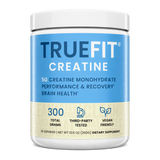
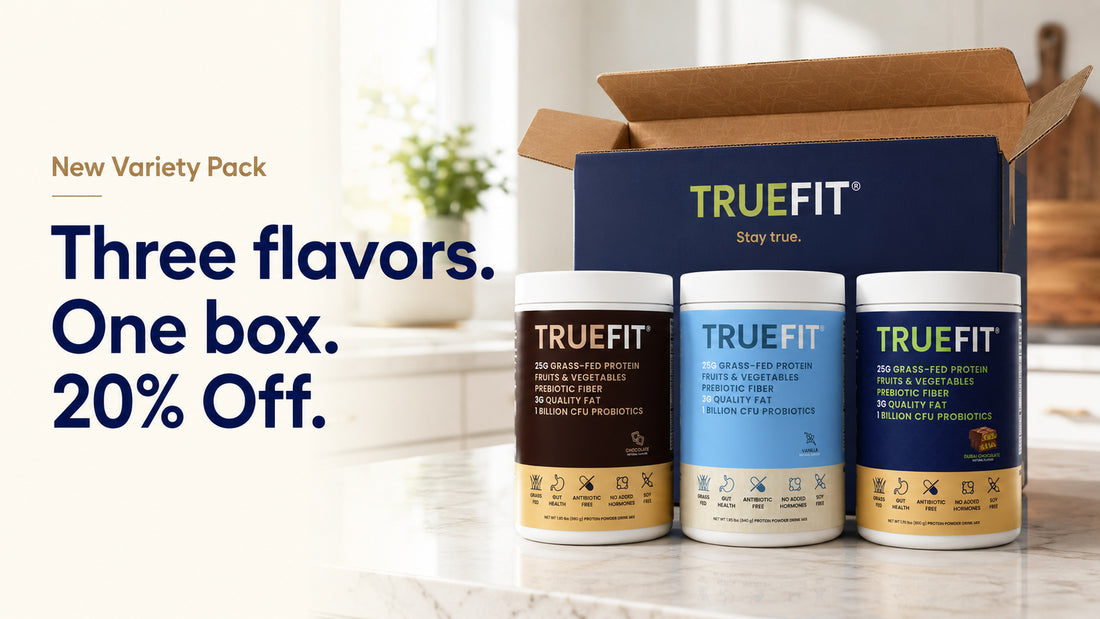
TrueFit contains 1 billion CFU probiotics to improve gut health and promote healthy gut microbiome.

Save 30% Today

So you've got a formula full of things that irritate your gut, and nothing in it to actually support digestion. That's the real recipe for GI distress.

This is exactly what TrueFit was built to fix.

TrueFit didn't just remove the bad stuff. It engineered protein that actively works with your gut instead of against it.

It starts with grass-fed whey. Not the cheapest commodity protein a factory can source, but clean, high-quality whey from grass-fed cows which is a better raw material that's easier on your system from the first sip.

It's genuinely clean-label. No artificial sweeteners, no synthetic fillers, none of the cheap additives that trigger bloat in the first place. When you cut the ingredients that cause GI distress, you cut the distress. Simple.

Then it adds what almost no other protein does: prebiotic fiber. Instead of stripping fiber out, TrueFit builds it in. That fiber feeds the beneficial bacteria in your gut, giving your microbiome the fuel it actually needs to thrive [5]. This is the piece nearly every protein powder ignores and the reason most of them leave your gut worse off than they found it.

TrueFit offers 4-5g of fiber per scoop to help maximize protein absorption.

Save 30% Today

And it goes one step further: live probiotics. Fiber feeds your good bacteria; probiotics reinforce their numbers directly. Together, prebiotic fiber and probiotics work as a system: one supports a balanced microbiome, the other strengthens it, and the combination supports smoother, more comfortable digestion [6].

That's the difference. Most powders hand you protein and walk away, leaving your gut to fend for itself. TrueFit delivers clean, grass-fed protein and the fiber and probiotics that keep digestion running smoothly so you get the muscle and recovery benefits without paying for them in bloat and discomfort.

Clean ingredients in. Gut support built in. Protein that finally feels as good as it works.

Nothing fake. Everything ingredient is earned.

Stay True.

References

[1] Boirie Y, et al. "Slow and fast dietary proteins differently modulate postprandial protein accretion." PNAS, 1997.

[2] Abou-Donia MB, et al. "Splenda alters gut microflora." Journal of Toxicology and Environmental Health, 2008.

[3] Lenhart A, Chey WD. "A Systematic Review of the Effects of Polyols on Gastrointestinal Health and IBS." Advances in Nutrition, 2017.

[4] Bhattacharyya S, et al. "Carrageenan-induced innate immune response mediated by TLR4." Journal of Biological Chemistry, 2008.

[5] Makki K, et al. "The Impact of Dietary Fiber on Gut Microbiota in Host Health and Disease." Cell Host & Microbe, 2018.

[6] Hill C, et al. "The ISAPP consensus statement on probiotics." Nature Reviews Gastroenterology & Hepatology, 2014.